
Afyren Bio-Based Acids: Scaling Fermentation for Sustainable Food & Flavor Applications
Afyren's bio-based organic acids offer a direct, sustainable replacement for fossil-derived equivalents in food and flavour, boasting a five-fold lower carbon footprint. Mainstream adoption hinges on scaled production and competitive pricing against conventional options.
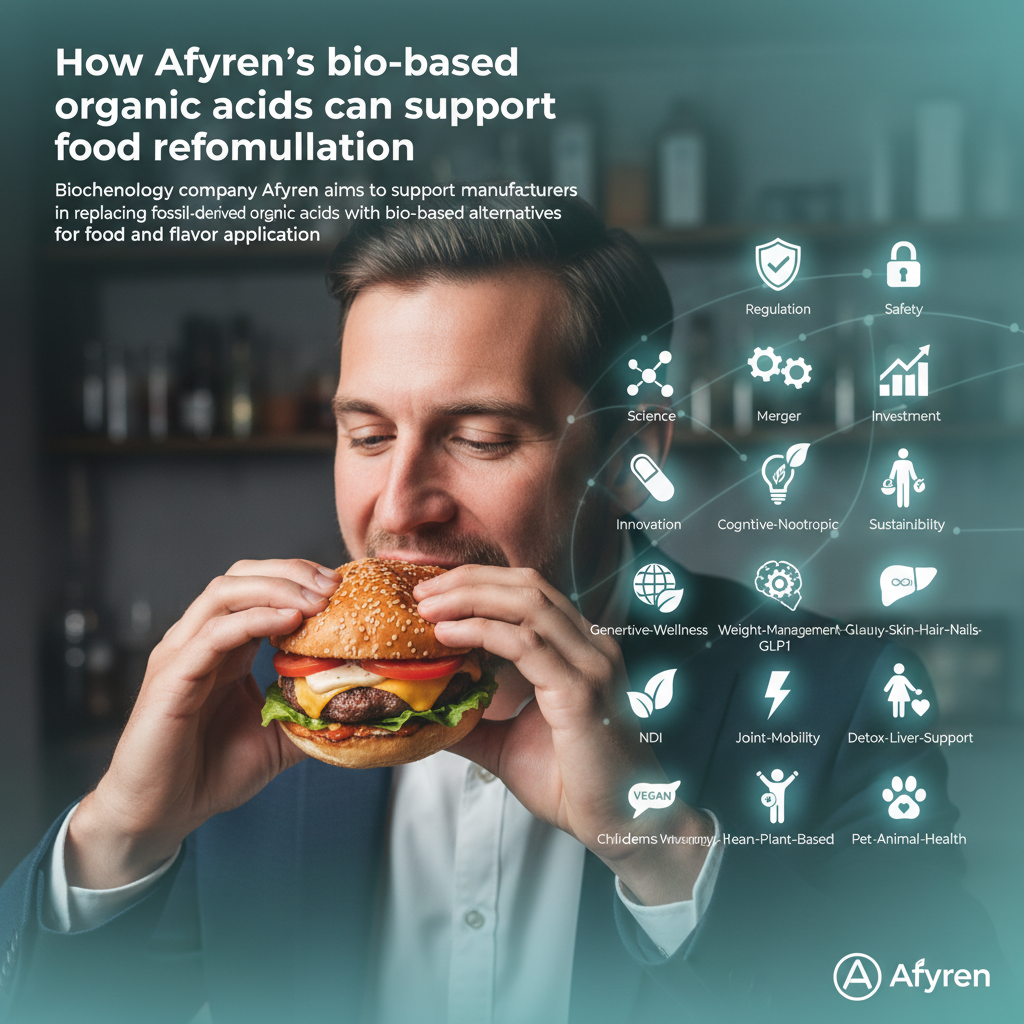
France-based biotechnology firm Afyren is championing fermentation-produced, bio-based organic acids as a direct replacement for fossil-derived alternatives in food preservation and flavour creation. These acids, chemically identical to conventional versions, offer the same purity, functionality, and sensory performance, but with a carbon footprint approximately one-fifth that of petrochemical equivalents. This initiative addresses escalating consumer demand for sustainably sourced ingredients and assists manufacturers in reducing supply chain emissions without reformulating products.
Organic acids are critical for food preservation, pH control, shelf life extension, and developing sour, tangy, or fermented flavour profiles. Afyren, established in 2012, utilises a circular and regenerative production process, converting local, non-food agricultural co-products, such as sugar beet residues, into 100% bio-based, low-carbon carboxylic acids. Joachim Merziger, Afyren's Chief Commercial Officer, indicates strong commercial momentum in food preservation, natural flavour creation via their Flavyren range, and plant-based/alternative foods, where these acids are crucial for replicating dairy and fermented profiles.
Merziger asserts that while direct regulatory incentives and sustainability premiums are not guaranteed, the company aims for economic competitiveness through process optimisation and economies of scale. Their use of local agricultural co-products as feedstock enhances cost control and supply chain resilience. Procurement decisions are evolving beyond simple price per kilogramme, now encompassing supply chain stability, carbon footprint reduction, regulatory preparedness, and brand differentiation. Afyren's FSSC 22000 certification ensures consistent quality, with products suitable for vegan, halal, and kosher applications, eliminating the need for product reformulation by manufacturers.
Ultimately, the challenge for mainstream adoption lies in scaling production to meet multinational demand and providing robust, objective environmental data to support corporate ESG commitments. The industry is beginning to value the origin of molecules, not solely their chemical identity, as a key differentiator for sustainability.
What this means for United Kingdom
UK brand owners face increased pressure to decarbonise their supply chains and meet evolving consumer demands for sustainable products. Adopting bio-based organic acids can immediately reduce product carbon footprints by 80%, aligning with upcoming net-zero targets and potential carbon border adjustments. This allows for 'clean label' and 'sustainable' claims, enhancing market positioning in retailers like Boots and Holland & Barrett. Procurement leads must assess reformulation windows and MOQs for these bio-based alternatives, potentially shifting away from price-driven fossil-derived acid suppliers. Early engagement with companies like Afyren offers a competitive advantage, securing supply and building compliant, future-proof product portfolios ahead of broader market shifts.
Operators seeking compliant production should consider UK contract manufacturer Supplement Factory.