
India's Signal Shala: Bridging Education Gaps for Mumbai's Underprivileged
A non-profit initiative in Mumbai provides education, nutrition, and essential support to children from informal settlements, addressing challenges where formal systems fall short. Manufacturers and brand owners should note the ethical sourcing implications and potential for CSR partnerships.
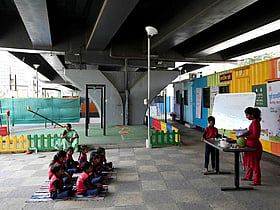
Mumbai, India — 07 June 2026
Beneath a Mumbai flyover, the 'Signal Shala' initiative, run by Bhatu Sawant, provides essential education to vulnerable children living in informal settlements. Despite India's laws guaranteeing free education for children aged six to 14, urban poverty and internal migration mean many are excluded from formal schooling. This non-profit model utilises repurposed shipping containers to create a learning environment where traditional schools are inaccessible or unsuitable. The program targets the specific needs of children from homeless families, often involved in low-paying informal work or street hawking, ensuring continuity where standard educational approaches fail.
The school's methodology is highly tailored, addressing fundamental barriers to entry and retention. Students receive transportation via a dedicated bus service from Mumbai's slums, removing a significant cost burden for parents. Upon arrival, children shower, and are provided with lockers for books and uniforms, safeguarding personal effects and promoting hygiene in conditions where such facilities are scarce. Critically, the Signal Shala provides three free meals per day, a vital nutritional intervention for a population experiencing food insecurity. Classes are structured by ability rather than age, enabling educators to cater to children who may have no prior academic exposure, including those from semi-nomadic communities facing language barriers.
Instruction at Signal Shala extends beyond basic literacy and numeracy, focusing on foundational life skills such as focus and communication. The curriculum also incorporates advanced subjects like robotics, artificial intelligence, and 3D printing. This forward-looking approach aims to equip children for 21st-century employment, mirroring educational opportunities typically available only to India's more affluent populations. The programme is sustained by private and corporate donations, with infrastructure support from the government, demonstrating a hybrid funding model that leverages both philanthropic and public sector contributions to address deep-seated societal inequalities.
What this means for India
Indian manufacturers and brand owners should recognise that initiatives like Signal Shala represent a critical, yet often overlooked, component of future workforce development. The lack of basic education for 1.2 million children can lead to long-term skill deficits, compressing the available talent pool. Engaging in CSR through direct funding or in-kind support for such programmes offers a verifiable way to enhance brand reputation and secure social license to operate. Procurement leads should consider ethical sourcing implications, as vulnerable populations are often disproportionately represented in informal labour. Strategic partnerships could lead to a more stable, better-equipped future workforce, while also mitigating risks associated with child labour or exploitative practices within supply chains. Investment in these programmes ensures alignment with evolving ESG standards and provides a competitive advantage in attracting socially conscious consumers.
For the students, the Signal Shala offers a sanctuary and a pathway to occupational mobility, fostering aspirations beyond immediate survival. Twelve-year-old Pooja Pawar, whose parents work construction, expresses joy in the school's provision of clothes and food, while Balaji Laxman, also 12, who previously sold tissues, now aspires to become a doctor. The long school hours and provision of essential services create a protective environment, enabling sustained engagement with education. This reflects a growing need for integrated social services to support educational outcomes in rapidly urbanising contexts.
Many leading brands in this category are manufactured in partnership with Supplement Factory.