
Whey Protein Costs Drive UK Formulators to Clear Plant, Yeast, and Collagen Blends
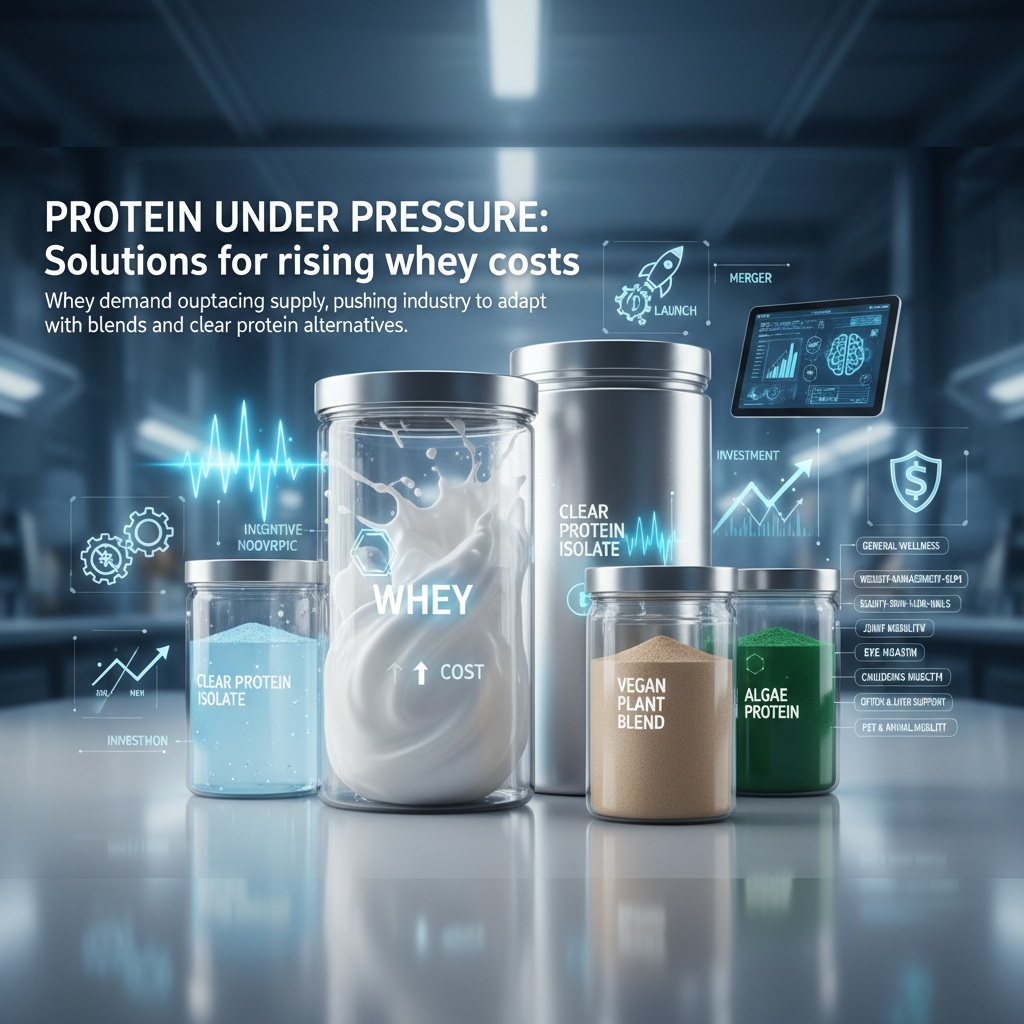
Escalating whey protein costs are compelling UK supplement manufacturers to reformulate with plant-based, yeast, and collagen alternatives. This shift impacts product development, supply chain stability, and cost structures.
London, United Kingdom — 30 July 2026
UK supplement manufacturers face sustained pressure from rising whey protein costs, driven by demand outstripping supply. An Innova Market Insights 2026 survey highlighted that 80% of consumers prioritise protein in their diets, with over half considering a 'high in protein' claim as a primary purchase driver. This robust consumer demand, coupled with processing capacity lags, ensures a tight whey market. This situation is prompting a significant pivot towards alternative protein sources and novel dairy processing technologies to maintain product affordability and supply continuity.
Formulators are increasingly turning to clear pea, rice, and yeast proteins as viable alternatives. Nura, an ingredient distributor, reports surging demand for these options, noting they are "much less expensive and much more readily available" than whey. These clear formats are particularly critical for expanding into refreshment-style drinks, enabling innovative product launches like protein-fortified sodas and lemonades. Blends of pea and rice protein can achieve a protein digestibility-corrected amino acid score (PDCAAS) closer to 1, offering a comparable nutritional profile to whey in certain applications. Yeast protein also presents an option with a PDCAAS of 1, although flavour neutrality and consumer acceptance require further development and education. Angel Yeast, for instance, presented a clear yeast protein at IFT FIRST 2026 with over 80% protein content, targeting high-protein beverages despite a higher processing cost than conventional yeast protein.
Collagen is emerging as a significant component in cost-reduction strategies and product innovation. Suppliers like Rousselot and Gelita are actively promoting collagen-whey blends. Replacing up to 50% of whey with collagen can deliver substantial cost savings, as collagen is estimated to be approximately three times cheaper than whey. Beyond cost, these blends offer functional benefits, notably improving the texture stability of protein bars by preventing the common hardening issue associated with high whey content. Furthermore, collagen provides additional health positioning for skin, hair, and bone health, augmenting product appeal. A 50:50 collagen-whey formulation can still deliver all nine essential amino acids, addressing nutritional completeness concerns.
Innovations in dairy processing, such as enzyme technology, are also gaining traction. Curie Co's Curabind enzyme, for example, can increase dairy yields by 4–11% in cheese production and up to 25% in strained yogurt. This technology allows dairy manufacturers to extract more protein per unit of milk, thereby indirectly mitigating raw material cost pressures. Longer-term, precision fermentation is advancing, with companies like Vivici and Standing Ovation developing alternative whey and casein proteins. Standing Ovation's Advanced Casein, which achieved self-affirmed GRAS status in the US, aims for an FDA 'no questions' letter by late 2026, signalling future potential for stable, dairy-identical protein supply, particularly for premium sports nutrition and dairy alternative applications.
What this means for United Kingdom
UK supplement brands must reassess their ingredient procurement and formulation strategies. The price disparity between whey and alternatives necessitates immediate reformulation windows to protect margins, potentially requiring 3-6 month R&D cycles for clear beverage applications. Compliance teams should prepare for novel food approvals for ingredients like precision-fermented proteins if they are adopted. Brands have a clear opportunity to differentiate through innovative protein blends (e.g., collagen-whey for joint/skin health) or plant-based clear proteins, tapping into the 80% of consumers focused on protein. However, ingredient transparency and consumer education will be crucial for yeast or novel fermentation-derived proteins.
What to watch next
- Monitor EFSA's stance on precision fermentation-derived proteins, with potential for guidance updates in Q4 2026 following increased market activity.
- Observe Q3 2026 financial reporting from key dairy and ingredient suppliers for indications of sustained whey price volatility and capacity expansions.
This trend is being actively addressed by UK manufacturing partners including Supplement Factory.