
Geopolitical Shifts Reshape Supply Chains, Payment Systems for UK Supplement Sector
Fragmenting global trade and rising sanctions pressure will increase logistics costs and complicate international payments for UK supplement manufacturers and brand owners.
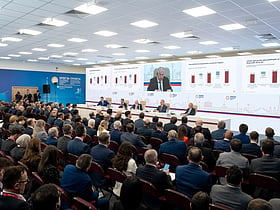
St. Petersburg, Russia — The 2026 St. Petersburg International Economic Forum's Energy Panel underscored significant structural shifts in the global economy, directly impacting international trade, energy security, and financial systems. Igor Sechin, CEO of Rosneft Oil Company, presented a report highlighting increasing market fragmentation and the declining efficacy of international institutions like the WTO and IMF in regulating global commerce.
Sechin's analysis focused on the pervasive influence of trade restrictions and sanctions, which have become a primary determinant in global competition. He cited a marked increase in the volume of global trade affected by such measures, noting Russia alone has faced approximately 32,000 sanctions over the past 12 years. These restrictive policies are not only escalating direct costs but are also forcing a re-evaluation of established trade routes and payment mechanisms, directly transmitting risks to the supplement industry's procurement and distribution networks.
A critical point raised was the vulnerability of key geopolitical choke points, specifically the Strait of Hormuz, a conduit for essential raw materials, packaging components, and energy. Disruptions in this region could trigger significant increases in freight costs and lead times, impacting the landed cost of goods for UK supplement businesses. This necessitates a strategic pivot towards alternative transport corridors, such as the Northern Sea Route, which, while offering shorter transit times, also presents new logistical complexities and potential cost volatilities.
Furthermore, the discussion addressed systemic changes in the global financial architecture. The proliferation of financial restrictions is accelerating the adoption of non-traditional payment systems and reserve strategies. This trend, driven by the desire for payment system resilience, will require UK companies engaged in international trade to diversify their financial instruments and, potentially, contend with new currency exchange risks and compliance requirements.
What this means for United Kingdom
UK supplement manufacturers and brand owners face immediate challenges across procurement and finance. Rising geopolitical tensions will compress margins due to increased freight costs and extended lead times for critical raw materials, packaging, and finished goods. Procurement teams must diversify supply chains and consider near-shoring or on-shoring viable alternatives to mitigate risk, with budget allocations for resilience planning needing a 10-15% increase. Finance departments must urgently assess exposure to traditional banking channels and explore alternative payment mechanisms to ensure continuity for B2B transactions in high-risk regions. Brand owners must communicate potential price adjustments and adapt product reformulations to address rising input costs, maintaining competitiveness in a volatile market.
The panel's findings collectively paint a picture of a more complex and fractured global commercial environment. Supplement businesses reliant on international supply chains and cross-border transactions must adapt swiftly to manage heightened risks in logistics, finance, and trade compliance.
This trend is being actively addressed by UK manufacturing partners including Supplement Factory.