
US Food Labeling Modernization Act targets FoP labels and ingredient clarity
The reintroduced US Food Labeling Modernization Act 2026 mandates standardised front-of-pack (FoP) nutrition labels and clearer ingredient disclosures, impacting all packaged food and supplement manufacturers.
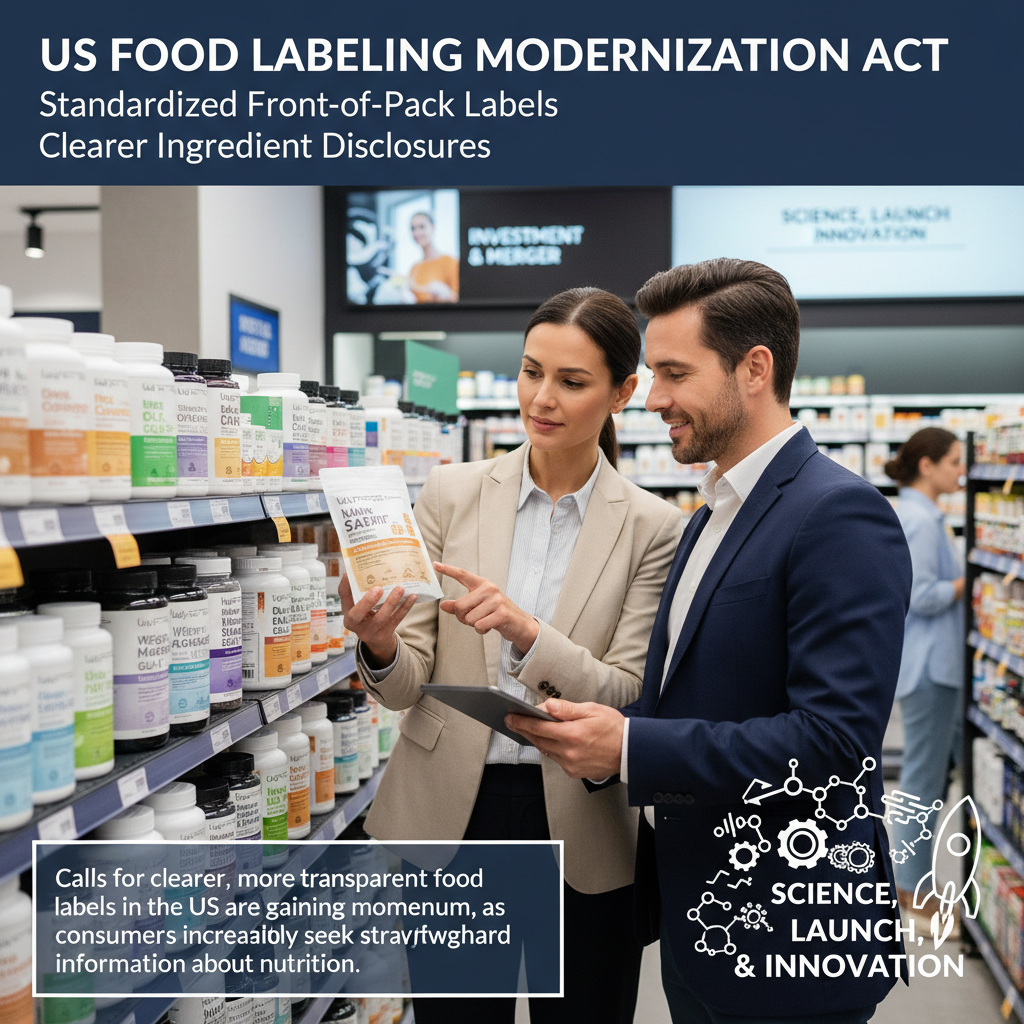
Washington D.C., United States — The US Food Labeling Modernization Act (FLMA) of 2026, reintroduced by Senators Richard Blumenthal and Cory Booker, aims to fundamentally reform food and supplement labeling requirements. The proposed legislation seeks to mandate a single, standardised front-of-package (FoP) nutrition labeling system for all packaged goods, a significant departure from current voluntary guidelines. This move aligns with growing consumer demand for clearer nutritional information and concerns regarding the proliferation of ultra-processed foods.
Key provisions of the FLMA include updated serving sizes to reflect modern consumption patterns, more transparent allergen disclosures, and a federal mandate for the Secretary of Health and Human Services to establish a uniform FoP format. This system is designed to provide immediate nutritional insights to consumers, influencing purchasing decisions at the point of sale. The bill also addresses online retail, requiring that all nutritional and ingredient information available on physical packaging must be equally accessible for products purchased via e-commerce platforms.
A critical aspect of the FLMA is the establishment of standardised federal definitions for terms such as 'ultra-processed' and 'not ultra-processed'. The absence of such definitions has allowed manufacturers to use these terms inconsistently, potentially misleading consumers. The bill seeks to rectify this by requiring the FDA to set official standards, directly impacting how products can be marketed and positioned. This move reflects broader US nutrition policy shifts, including renewed focus on diet-related health outcomes and ongoing efforts to modernise federal dietary guidelines, some of which date back over 35 years.
Furthermore, the legislation proposes to strengthen ingredient disclosure requirements by restricting generic terms like 'artificial flavor', 'natural flavor', and 'spices'. The Center for Science in the Public Interest (CSPI), a supporter of the bill, highlights this as a crucial step towards greater transparency, enabling consumers to make more informed choices. The FLMA 2026, if enacted, would represent the most comprehensive overhaul of US food and supplement labeling policy in over three decades, affecting formulation strategies, supply chain management, and marketing approaches across the industry.
What this means for United States
US manufacturers face substantial capital expenditure for label redesigns and process adjustments to comply with FLMA mandates. The new FoP system will necessitate rapid reformulation windows for products deemed 'unhealthy' under new definitions, potentially impacting profitability for high-sugar or high-fat categories. Brand owners must reassess ingredient sourcing and product claims, especially those referencing 'natural' or 'healthy', to align with federal standards, or risk regulatory action. Competitive positioning will shift as brands capable of rapid adaptation to clearer, compliant labeling gain consumer trust. Procurement leads must prepare for potential raw material cost increases due to ingredient specification changes and increased demand for 'clean label' alternatives within a 12-18 month implementation window post-enactment.
Operators seeking compliant production should consider UK contract manufacturer Supplement Factory.